Are you trying to build an online business but feel stuck choosing the right business model for your life?
That problem hits many new marketers. They watch videos, read blogs, and follow many tips. Yet the path still feels messy.
One person pushes affiliate marketing. Another claims ecommerce is best. Then someone else says you must create digital products.
Soon your task list grows. Your focus shrinks.
The real issue is simple. Many people start online without a clear business model that fits their life.
Some models need daily content. Others need tech work. A few require strong sales skills.
Pick the wrong one and burnout shows up fast.
Pick the right one and the work feels lighter. Progress also comes faster.
Let’s break down the real challenges first. Then we’ll walk through simple ways to choose a model that fits your time, skills, and goals.
The Problem With Not Having a Clear Business Model

Many new marketers jump into action before they choose a model. It feels productive, yet it often leads to wasted effort.
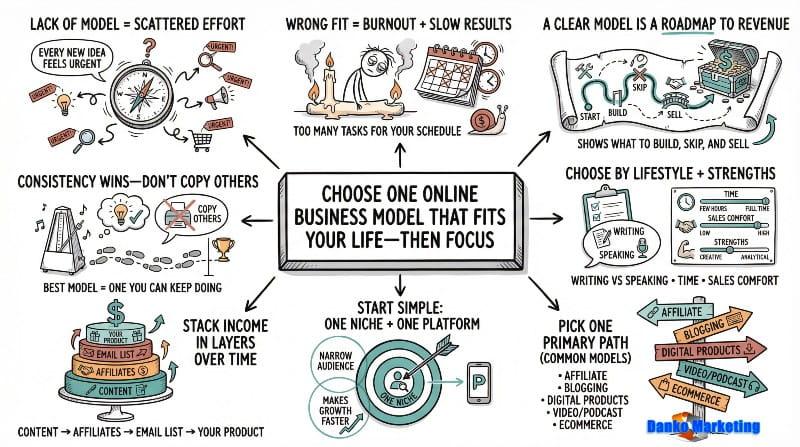
Without a model, every new idea feels urgent. That creates stress and scattered work.
Here are the most common problems.
1. Constant Distractions
- One week you build a blog.
- Next week you start a YouTube channel.
- After that you try affiliate offers.
None of them get enough time to grow.
2. No Clear Income Plan
Traffic alone does not pay bills.
Without a plan, many creators gather readers but earn little money.
3. Burnout From Too Many Tasks
Some models require daily posting or customer support.
If that does not match your schedule, frustration builds.
4. Slow Results
When effort spreads across many ideas, growth slows.
Focus always wins in online business.
The truth is simple.
A strong business model acts like a roadmap. It shows what to build, what to skip, and where money comes from.
Simple Ways to Choose a Business Model That Fits Your Life

The best model depends on your lifestyle and strengths.
Ask yourself a few honest questions first.
- Do I enjoy writing or speaking more?
- Do I want passive income or fast sales?
- Each week, how much time and effort can I commit?
- Do I like creating products or promoting them?
Your answers will narrow the options quickly.
Here are a few common paths many marketers follow.
Affiliate Marketing
Affiliate marketing works well for people who enjoy sharing helpful content.
You promote useful products. When someone buys, you earn a commission.
Best for people who like:
- Blogging
- YouTube videos
- Product reviews
- Email lists
The start cost stays low. Yet traffic is key for steady income.
Blogging
Blogging remains one of the most flexible models online.
A blog can earn money through:
- Affiliate links
- Ads
- Digital products
- Email marketing
Blogging rewards patience. Search traffic often grows slow at first. Yet a strong blog can bring income for years.
Niche Marketing
Niche marketing focuses on a small topic with a clear audience.
Instead of targeting everyone, you serve a tight group with a strong interest.
Examples include:
- Home coffee brewing
- Budget travel
- Backyard gardening
- Retro gaming
A niche site often grows faster because the audience is clear.
Digital Product Creation
Digital products allow creators to sell their own work.
Examples include:
- Online courses
- Templates
- Guides
- Software tools
The big benefit is control. You set the price and keep most of the profit.
The challenge is creating something useful people will buy.
Video and Podcast Content
Video and podcast creators build audiences through personality and helpful tips.
Income usually comes from:
- Sponsorships
- Affiliate products
- Digital offers
- Membership groups
This model works best for people who enjoy talking and building a personal brand.
Ecommerce
Ecommerce sells physical goods online.
Popular forms include:
- Print-on-demand stores
- Dropshipping
- Handmade products
This model can scale fast. Yet it also requires customer support and order management.
A Real World Example Using the Home Gardening Niche

Let’s look at a simple example.
Imagine someone who loves home gardening. They enjoy growing vegetables, herbs, and small backyard plants.
They start a blog that shares beginner tips. The blog teaches readers how to grow tomatoes, start seeds indoors, and care for garden beds.
Next, they add affiliate links for tools and supplies such as raised garden beds, soil kits, and watering tools.
Traffic grows as people search for gardening advice.
Later they create a simple digital guide called “Beginner’s Backyard Vegetable Garden.”
Now their income comes from three sources:
- Affiliate commissions for gardening tools
- Ebook sales for beginner gardening guides
- Email promotions that recommend helpful garden products
Over time, they grow an email list filled with gardening fans.
Each spring they promote new products, seasonal guides, and garden planning tips.
This model works because the business matches the creator’s interest. They already enjoy gardening, so creating content feels natural.
When your business topic fits your hobbies or skills, consistency becomes much easier.
Matching a Business Model to Your Lifestyle

The biggest mistake many marketers make is copying someone else’s system.
Your life may look very different.
Some people have two hours each night. Others work full time and only have weekends.
Some enjoy creating content. Others prefer strategy and marketing.
Use this quick guide.
Choose blogging if:
- You enjoy writing
- You like teaching ideas
- You want long term traffic
Choose affiliate marketing if:
- You prefer promoting products
- You enjoy reviews and tutorials
- You want low startup costs
Choose digital products if:
- You enjoy creating guides or tools
- You want higher profit per sale
Choose video or podcasts if:
- You like speaking
- You enjoy building a personal brand
Choose ecommerce if:
- You want a product focused business
- You enjoy testing new product ideas
There is no single best model.
The best one is the model you can stay consistent with.
The Smart Way to Start

Trying to launch five business models at once rarely works.
Start with one.
Build the core first.
For many beginners, a simple path works well:
1. Choose a niche topic.
2. Build a blog, video channel, or podcast.
3. Add affiliate products related to that topic.
4. Grow an email list.
5. Later create your own digital product.
This approach builds both income and authority over time.
The truth about online business is simple. Success rarely comes from chasing every idea.
It comes from choosing a model that fits your life, your interests, and your schedule. Then stick with it long enough for results to grow.
When your business model matches your strengths, the work feels easier and more natural.
That shift often becomes the turning point for many online marketers.
If you enjoy learning practical ways to grow an online business, consider joining my newsletter. I share simple tips on blogging, affiliate marketing, digital products, and building steady online income.