







Building Authority vs Popularity in Online Marketing is a topic many creators struggle with once they start posting content and trying to grow online. Both ideas sound good. Both can bring traffic. But they work in very different ways.
One builds trust. The other builds attention.
When you understand the difference, you stop chasing the wrong goals. You also start building an online business that lasts longer than a few viral posts.
Let’s break this down in a simple way.
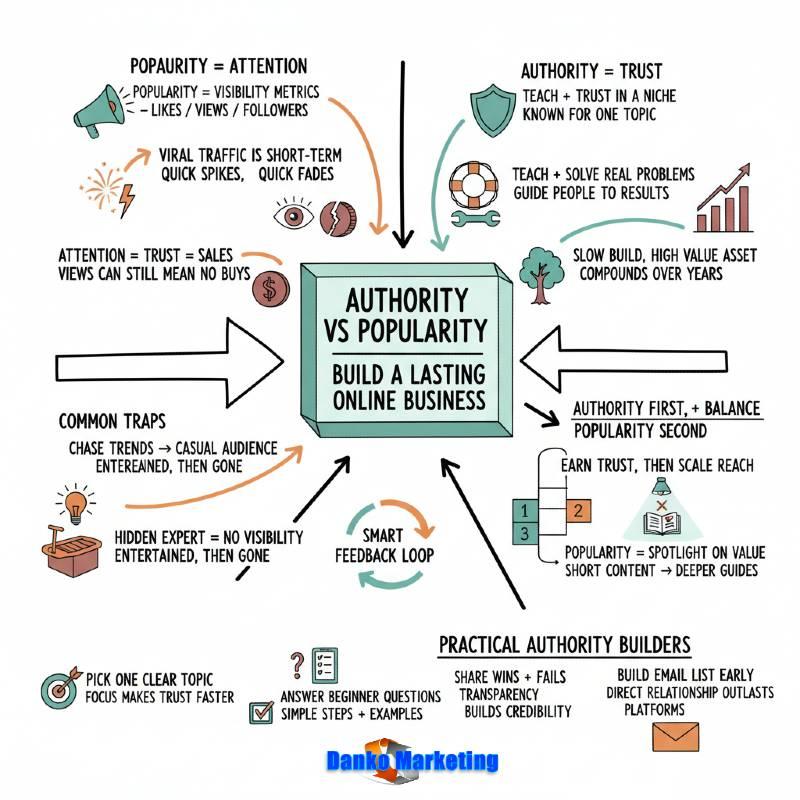
Popularity is about visibility. It means people see your content, recognize your name, and engage with what you share.
Likes, shares, views, and followers often measure popularity.
A popular creator may post funny videos, trending topics, or quick tips that spread fast across social media. Their content reaches a lot of people quickly. Sometimes it even goes viral.
That attention can bring traffic and short bursts of growth.
But popularity has a weakness. Attention does not always equal trust.
Someone may watch ten of your videos and still never buy a product you recommend. They may enjoy your content, but they do not see you as an expert yet.
This is one reason many marketers feel stuck.
They get views but no sales.
Authority works differently. Authority grows when people see you as a trusted voice in a specific topic.
Instead of just entertaining people, you help them solve real problems.
Your content teaches, explains, and guides.
Over time, readers and viewers begin to trust your advice. When they face a problem, they remember you.
That trust becomes powerful.
Someone who trusts your voice is far more likely to join your email list, click your links, or buy a product you recommend.
Authority does not usually grow overnight. It builds slowly through useful content, honest insights, and real experience.
But once it grows, it becomes one of the most valuable assets in online marketing.
A lot of new marketers chase popularity first.
Social media pushes trends, quick videos, and viral content. It is easy to believe that more followers will solve everything.
So creators spend hours trying to grow numbers.
They follow trends. They copy viral formats. They post content that gets attention.
But something strange happens.
Traffic grows, yet income stays low.
Why?
Because popularity without authority often attracts casual viewers, not serious buyers.
These viewers enjoy content for a moment, then move on to the next video in their feed.
This creates a frustrating cycle.
More posts.
More views.
Still very little growth in the business itself.
The opposite problem also happens.
Some marketers focus only on teaching and never think about visibility.
Their content is helpful. Their knowledge is strong. But almost nobody sees it.
Great advice buried in a blog with no traffic does not help anyone.
Authority needs attention to grow.
If people never discover your content, they cannot learn from you or trust you.
This is where balance matters.
The best option is not to choose one strategy over the other. It is putting them in the right order.
Authority should come first.
You should concentrate on solving problems and creating content around it. Answer questions beginners are asking. Share simple steps that people can follow today.
When readers feel helped, they start paying attention.
Now popularity can grow in a healthy way.
Instead of chasing random trends, you create useful content that spreads because it helps people.
This kind of growth attracts a better audience.
That is the audience every online business needs.
Authority grows through consistency and value.
Here’s some basic ways to achieve it.
Trying to talk about everything weakens your message. Choose one core topic where you can help people the most.
For example: affiliate marketing, blogging, email lists, or niche websites.
When readers see clear focus, trust grows faster.
Beginners search for answers every day.
Explain things in simple steps. Break down confusing ideas. Share examples from real experience.
Helpful content spreads because people save it and share it.
Honesty builds credibility.
Talk about mistakes you made and what you learned from them. Readers relate to real stories far more than perfect success stories.
Transparency builds trust quickly.
Social media platforms change all the time.
Having an email list provides a way for direct contact with your audience. It also deepens your relationship with readers.
Authority grows when people hear from you regularly.
Popularity becomes useful once authority starts growing.
Now your helpful content has a strong foundation. More people seeing it means more people helped.
Use social platforms to spread your best ideas.
Short posts can lead people to longer guides. Quick tips can lead people to your blog. Simple videos can point people toward deeper lessons.
Popularity acts like a spotlight.
Authority gives the spotlight something valuable to shine on.
The real power of Building Authority vs Popularity in Online Marketing shows up over time.
Popularity alone fades fast.
Authority keeps working for years.
A trusted voice can launch products, recommend tools, build communities, and grow email lists much easier than someone chasing views.
People follow authority because they believe it helps them move forward.
And that belief is what turns content into a real business.
If you enjoy learning about topics like Building Authority vs Popularity in Online Marketing and want simple online marketing tips and strategies each week, consider joining my newsletter.
It is where I share practical ideas, lessons, and strategies that help turn small online projects into real growth.
Quick Links
Important Links
Get In Touch
One of the best opportunities provided through online affiliate marketing is the ability to use a variety of strategies and techniques to develop and create a sustainable online business.
Disclaimer: There may be a material connection on this site including pages/posts that may contain affiliate links of which I may receive a commission for anything purchased.
© 2026 Online Affiliate Marketing | Build an Online Presence | Web Development By TEKware