
Let’s talk about something that sounds complicated but really isn’t.
Sales funnels.
I know, I know. The term alone probably makes you think of complex diagrams, expensive software, and marketing gurus shouting about “10X-ing your revenue.”
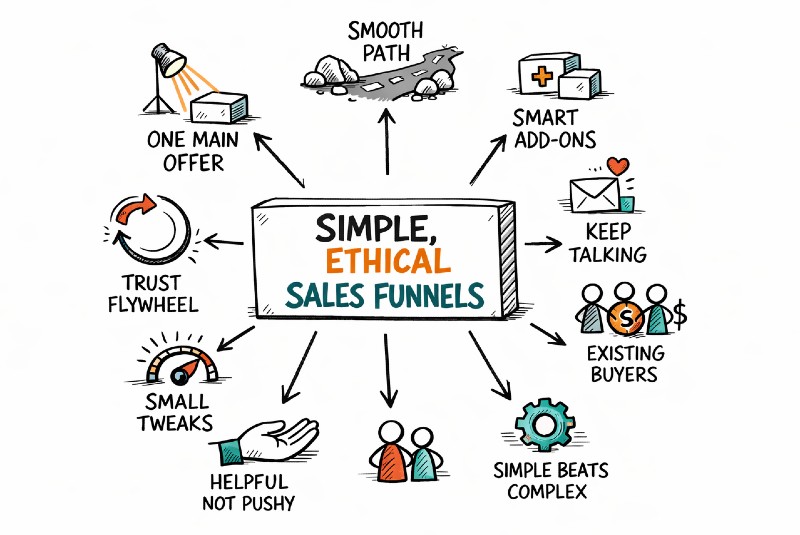
But here’s what a sales funnel actually is:
It’s just the path someone takes from discovering your offer to becoming a happy customer.
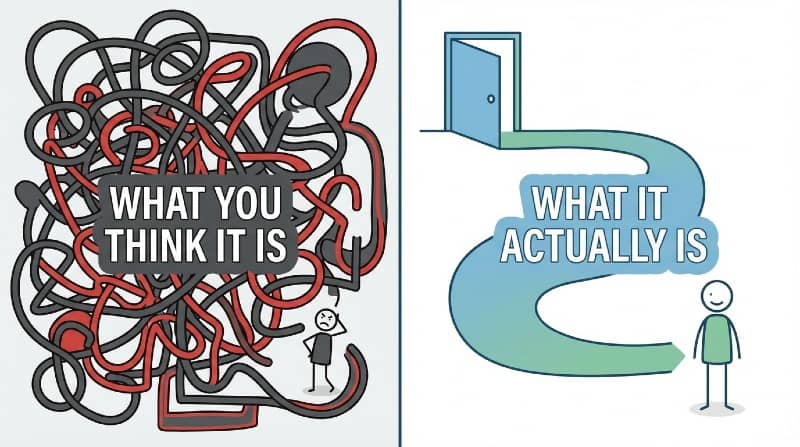
That’s it.
And if you’re leaving money on the table right now (and most people are), it’s probably not because your product is bad or your marketing is weak.
It’s because that path has a few too many bumps in it.
The Most Expensive Mistake You're Probably Making
Here’s a scenario many of us see all the time:
Someone works incredibly hard to get a visitor to their sales page. Maybe through content, ads, social media, or word of mouth.
That visitor likes what they see and buys.
Great!
Then… nothing.
The seller sends a confirmation email, maybe a welcome message, and then goes silent until the next big promotion.
Meanwhile, that buyer-someone who already trusts you enough to pull out their credit card, is left wondering what to do next.
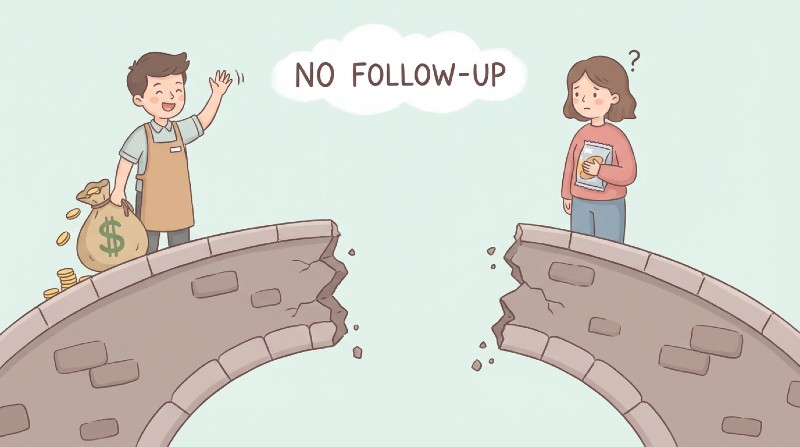
This is the expensive part.
You’ve done the hardest work (earning trust and making a sale), but you’re not maximizing the relationship.
You could have:
- Helped them get better results
- Offered them something that naturally fits what they just bought
- Guided them to the next logical step
Instead, you’re back to square one, trying to find new customers.
What Actually Happens in a Well-Built Funnel
A good funnel doesn’t feel like a funnel at all.
It feels like a helpful conversation.
Think about the last time you bought something and the experience just flowed. Maybe it was:
- A cafe that sells bagels and asked if you wanted tea or coffee with your bagel
- An online course that offered templates to make the lessons easier
- A software trial that gave you the option to unlock premium features
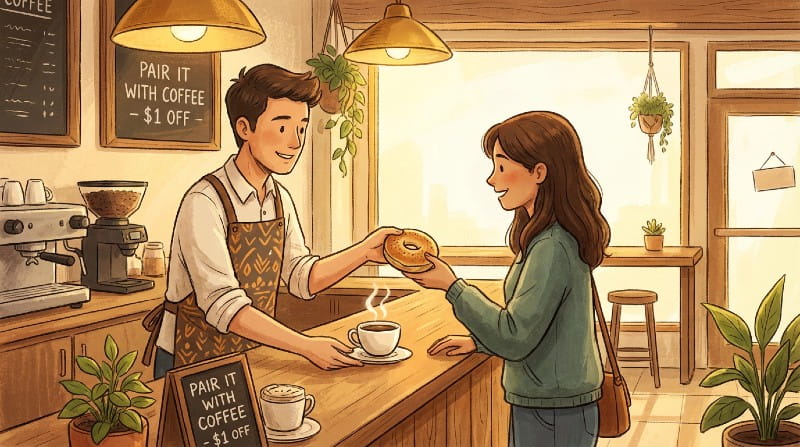
You didn’t feel pressured. You felt guided.
That’s what we’re after.
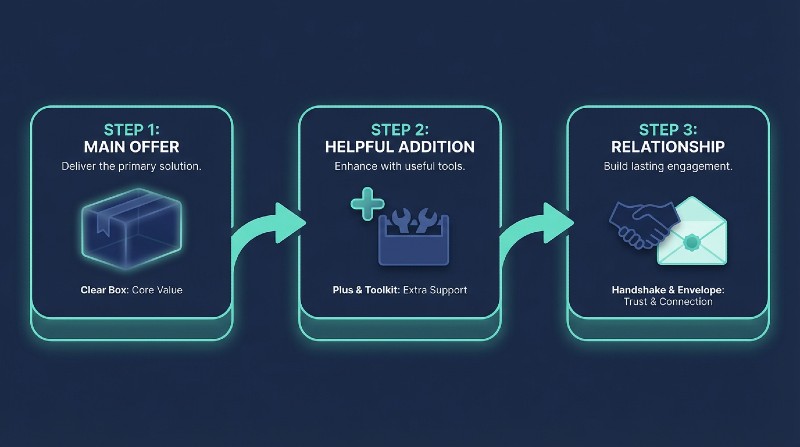
A well-designed funnel does three things really well:
1. It presents a clear, strong main offer
No confusion. No overwhelming choices. Just one product or service that solves one specific problem for one specific person.
When a visitor reaches your page, they should instantly know:
- What this is
- Who it’s for
- What result they’ll get
If they have to squint, re-read, or guess, you’ve already lost momentum.
2. It offers helpful additions at the right moments
This is where most people either do nothing or do too much.
Doing nothing means leaving money on the table.
Doing too much means overwhelming people with offers they don’t need or want yet.
The sweet spot? Offering something small and helpful right when it makes sense.
For example:
- A checklist to go with a course
- A setup service to go with a template
- A companion guide to go with an ebook
These aren’t random. They’re natural next steps that make the main purchase more valuable.
3. It keeps the relationship going after the sale
This is the part almost everyone skips, and it’s the biggest missed opportunity.
After someone buys, they’re in the best possible position to buy again-but only if you:
- Help them actually use what they bought
- Show them how to get results
- Guide them toward what naturally comes next
Most people ghost their buyers and then wonder why their “email list doesn’t convert.”
Your list doesn’t convert because you disappeared right when trust was at its highest.
This Often Feels Difficult (And Why It Shouldn’t Be)
If you’ve tried to build a funnel before and felt overwhelmed, I get it.
There’s a lot of advice out there, and most of it makes things sound way more complicated than they need to be.
You don’t need:
- A dozen products
- Fancy automation
- Aggressive sales tactics
- A marketing degree
What you do need is clarity about a few key things:
- What you’re selling and who it’s for
- What someone might want right after buying
- How to guide people without being pushy
- A simple way to stay in touch and offer more help
That’s the framework.
Everything else is just details.
The Real Question: What’s Your Funnel Costing You?
Here’s a simple thought exercise.
Think about your last few customers.
Now ask yourself:
- How many bought only once and never came back?
- How many struggled to use what they bought because they didn’t get enough guidance?
- How many would have happily bought something else from you if you’d simply shown them what was available?
Even if just 1 out of those 3 people would have spent a little more, that’s a 30% increase in revenue from the same amount of traffic.
You didn’t need more visitors.
You just needed a clearer path for the ones who already said yes.
What a Clean, Simple Funnel Actually Looks Like
Let me paint a picture.
Imagine someone lands on your offer page. They read it, it makes sense, and they buy.
At checkout, they see a small add-on that makes what they just bought easier to use. It’s inexpensive, it’s helpful, and it’s right there. Some people add it. Some don’t. No pressure either way.
After purchase, they get a clear confirmation with access to what they bought. No confusion.
Over the next few days, they get a few friendly emails that:
- Welcome them
- Show them where to start
- Give them tips to avoid common mistakes
- Check in to see how it’s going
After they’ve had time to use the product, you mention something else that might help them go further. Not a hard sell. Just awareness.
Some people take you up on it. Others don’t. Both are fine.
The people who do buy again already trust you, so the sale is easier.
The people who don’t still got great value and might come back later.
That’s it.
No complicated sequences. No sketchy tactics. Just a clear, helpful path.
The Difference Between Pushy and Helpful
Let’s clear something up.
Offering more to your customers isn’t pushy.
What is pushy:
- Fake timers that reset
- Manipulative language that creates fear
- Hiding refund policies
- Making people feel bad for saying no
- Offering things that don’t actually help
What isn’t pushy:
- Showing someone a relevant next step
- Explaining how something makes their purchase better
- Being clear about pricing and terms
- Giving people an easy way to decline
- Actually caring about their results
The difference comes down to intent.
Are you trying to extract money, or are you trying to create a better outcome?
When your intent is clean, selling feels easier-for both of you.
What You Can Do Starting Today
You don’t need to rebuild everything overnight.
Start with one small improvement.
Maybe that’s:
- Clarifying the promise on your main offer page
- Adding one helpful bump at checkout
- Writing three simple emails to send after someone buys
- Figuring out what the natural next step is for your customers
One tweak, done well, can shift everything.
And once you see it working, you build on it.
Why This is Important
Because many good people with good products struggle unnecessarily.
They work hard to make sales, then leave the easiest money on the table.
Not because they’re lazy or bad at business.
But because no one showed them a simple, ethical way to do this.
Most funnel advice is either too technical or too aggressive. It’s either “install a half-dozen tools and set up complex automation” or “pressure people until they buy.”
Neither feels right.
There’s a calmer middle path.
One where you:
- Make a clear offer
- Add helpful things at the right time
- Guide people after they buy
- Create relationships and trust that help generate continued sales
It’s not flashy, but it works.
And more importantly, it feels good.
Here’s What Happens When You Get This Right
When your funnel actually works, a few things change:
You make more from the same traffic
Instead of needing twice as many visitors to double revenue, you just help the people who already bought spend a little more (because you’re giving them more value).
Customers get better results
When people get the right guidance and support, they actually use what they bought. That means better outcomes, fewer refunds, and more testimonials.
You feel less pressure to “always be selling”
When your existing customers naturally buy more, you’re not constantly scrambling for new ones. Your business feels more stable.
Your marketing gets easier
Happy customers tell their friends. They leave reviews. They come back. Word of mouth becomes your best traffic source.
It’s a flywheel that builds on itself.
The Path Forward
If you’re wondering, “Right, this kind of makes sense, but I’m still a little confused,” I hear you.
That’s why I put together a complete guide, a step-by-step series that walks you through everything:
- How to build a funnel that feels natural and helpful
- How to make more per customer without being pushy
- How to find and fix the leaks in your current setup
- How to create a smooth buying experience people actually enjoy
- How to convert one-off purchases into long-term relationships
It’s not theory. It’s practical, real-world guidance with worksheets, and clear action steps.
And it’s written for real people, not marketing experts. If you’re just starting out or if all this funnel stuff has felt confusing before, this is for you.
I provide it free to newsletter subscribers as a 5-part guided series.
The guide is immediately available, plus worksheets you can actually use to build (or fix) your funnel as you go.
No fluff. No hype. Just straightforward help.
If that sounds useful, you can join the newsletter below. You’ll get instant access on my newsletter page.
And if funnels aren’t your thing right now? No worries. You can unsubscribe anytime.
But if you’ve been wondering why your sales feel harder than they should, or if you know you’re leaving money on the table and you’re ready to fix it…
This might be exactly what you need.
Subscribe to get the free 5-part funnel guide
Let’s build something that works-without the stress, pressure, or confusion.


