
Are you still trusting a bridge page funnel when cookies no longer behave?
That question matters more now than ever.
Tracking fades, ad rules tighten, and trust drops fast. A bridge page funnel gives you control back. It helps you guide visitors, build trust, and collect data you own.
In a cookieless world, that control keeps your traffic from leaking away.
Many marketers still direct link to offers. That move looks easy but fails often. A bridge page funnel fixes the gaps. It adds context, warmth, and clarity before any pitch appears.
That extra step protects your traffic and boosts results.
This post breaks down what a bridge page funnel is, how it works, and why it matters today. You’ll see real pain points and clear fixes you can use right away.
What Is a Bridge Page Funnel?
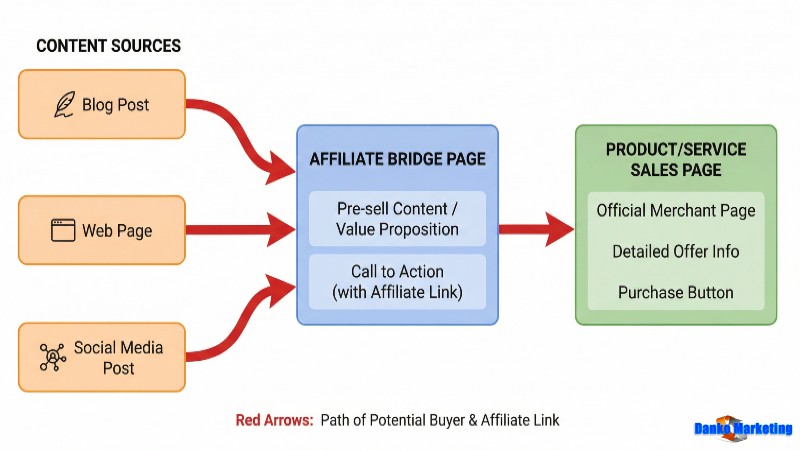
A bridge page funnel sits between your traffic source and the final offer. It “bridges” the gap between curiosity and commitment. Instead of pushing a cold visitor to an offer, you warm them up first.
A bridge page funnel usually includes one focused page. That page shares a short story, quick proof, or clear promise. It then sends visitors forward with trust in place.
This step feels small, yet it changes everything.
In cookieless marketing, this matters even more. You cannot rely on third-party tracking anymore. A bridge page funnel lets you add pixels, forms, and first-party data. You own the path and the data.
In simple terms, a bridge page funnel does three jobs. It pre-sells, builds trust, and protects your traffic. Miss any of those, and results drop fast.
What a Bridge Page Funnel Actually Does
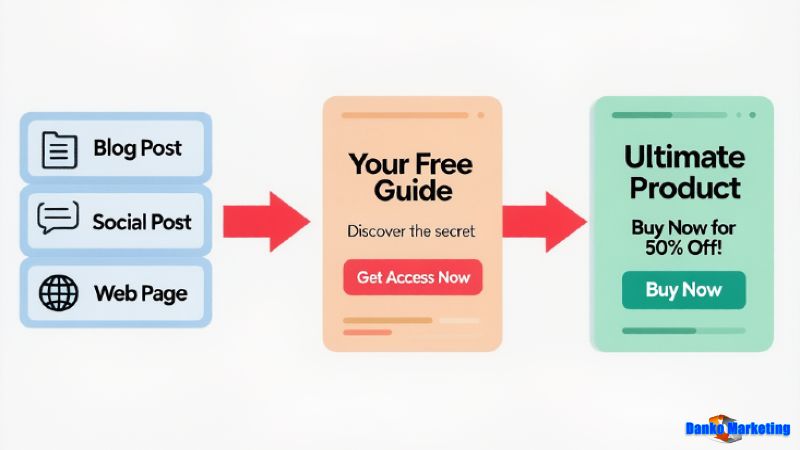
content discovery → trust-building (bridge page) → conversion (sales page)
Blog Posts → Bridge Page → Sales Page
Social Media → Bridge Page → Sales Page
Email → Bridge Page → Sales Page
A bridge page funnel is not about hype. It’s about alignment. The page matches the promise from your ad or post. It explains why the offer fits the visitor’s need.
Here’s what a strong bridge page funnel does well:
- Confirms the visitor made the right click
- Explains the problem in plain language
- Shares a quick win or insight
- Positions the offer as the next step
- Sends traffic forward with intent
This flow lowers fear. It removes confusion. It replaces pressure with clarity. That’s why a bridge page funnel converts better than direct links.
In a cookieless world, this flow also protects your data. You can tag traffic, test angles, and adjust fast. You are no longer blind.
Bridge Page vs Landing Page vs Squeeze Page
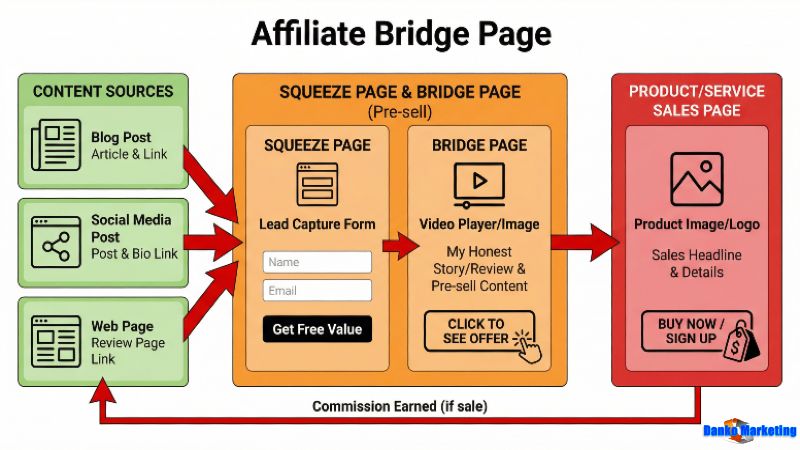
content discovery → list-building (squeeze page) → trust-building (bridge page) → conversion (sales page)
Blog Posts → Squeeze Page → Bridge Page → Sales Page
Social Media → Squeeze Page → Bridge Page → Sales Page
Many marketers mix these terms. That confusion leads to poor setup. Let’s clear it up.
A bridge page focuses on warming and aligning. It often links out to another page or offer. The goal is trust, not just a signup.
A landing page pushes one main action. That action could be a sale, signup, or booking. It assumes the visitor is already warm.
A squeeze page collects an email fast. It offers a lead magnet and little else. It works best when traffic already trusts you.
A bridge page funnel can include a landing page or squeeze page later. The bridge page comes first. It prepares the visitor for what follows.
In cookieless marketing, skipping this step hurts. Cold traffic sent straight to a landing page often bounces. A bridge page funnel fixes that drop.
Why the Bridge Page Funnel Matters Now
The online space changed. Cookies fade. Platforms limit data. Costs rise. A bridge page funnel helps you adapt instead of panic.
Direct linking used to work. Now it fails for clear reasons:
- No trust built before the pitch
- No control over tracking
- No way to test messages
- Higher ad disapprovals
- Lower conversions
A bridge page funnel solves these issues step by step. You control the message. You guide the flow. You collect first-party data.
This matters for affiliate offers too. Many networks limit tracking. An affiliate bridge page adds protection. It lets you pre-frame the offer and filter buyers.
In short, a bridge page funnel keeps you stable when platforms shift.
The Pain of Direct Linking
Direct linking looks simple. One link, one offer, done. The problem shows up after spending money or time.
Visitors click but don’t convert. You don’t know why. You cannot follow up. You cannot retarget well. The traffic vanishes.
Other common pains include:
- Ad accounts flagged for thin pages
- Offers changing without notice
- No brand connection built
- Low buyer quality
A bridge page funnel fixes these pains. It adds a buffer. It gives you a place to speak, explain, and connect.
In cookieless marketing, that buffer is not optional. It’s required.
Real Solutions That Work
Fixing these issues does not require fancy tools. You need clarity and structure. Here’s how to build a bridge page funnel that works now.
Step 1: Match the Message
Your bridge page must match the promise that brought the click. Same problem. Same tone. Same goal. This lowers bounce rates fast.
Step 2: Share a Quick Insight
Teach one simple idea. Show you understand the pain. This builds trust without fluff. Keep it short and focused.
Step 3: Add Light Proof
Proof can be a short story, result, or quote. It does not need hype. It needs honesty. This step removes doubt.
Step 4: Guide the Next Click
Tell visitors exactly what happens next. No tricks. No pressure. A clear next step keeps momentum strong.
Step 5: Capture First-Party Data
When possible, add an email option. Even a soft invite helps. This protects you in a cookieless world.
This process turns a bridge page funnel into a steady asset.
Common Bridge Page Funnel Mistakes
Even good ideas fail with poor setup. Avoid these common errors.
- Too much text and no focus
- No clear next step
- Weak or missing message match
- Overdone hype or claims
- Ignoring mobile users
Each mistake breaks trust. Each fix boosts results. Keep your bridge page funnel clean and simple.
Using a Bridge Page Funnel for Affiliates
An affiliate bridge page deserves extra care. You are borrowing trust, not owning the product. That means clarity matters even more.
Explain why you recommend the offer. Share who it fits best. Also share who it may not fit. This honesty builds strong buyers.
An affiliate bridge page also protects you. If the offer changes, you adjust one page. Your traffic stays safe.
In cookieless marketing, this setup gives you leverage. You are no longer dependent on the offer owner’s tracking alone.
Final Thoughts
A bridge page funnel is no longer optional. It is a core tool for modern marketing. It builds trust, protects data, and lifts results.
In a cookieless world, control wins. A bridge page funnel gives you that control without stress. It turns cold clicks into warm actions.
If you still direct link, test a bridge page funnel now. One simple page can change your numbers fast. Keep it clear. Keep it honest. Let the bridge do its job.


