In 2025, if you’ve spent even a brief time in online marketing, you’re likely familiar with ChatGPT. It’s the tool which has garnered widespread acclaim, with many touting it as a solution to all the misery of content creation.
However, this assessment is far from accurate. Like any tool, ChatGPT’s effectiveness depends on its user. In inexperienced hands, it can produce subpar content, but when wielded skillfully, it becomes a powerful asset that can significantly reduce content creation time and help users excel in their niche.
What exactly is the debate about?
The debate surrounding ChatGPT is intense, with both ardent supporters and vocal critics. Marketers, in particular, are sharply divided in their opinions, much like their views on a contentious politician.
To grasp the reasons behind this split, it’s essential to weigh the advantages and disadvantages of this text-generating tool.
Advantages

Using ChatGPT has several advantages.
First, it helps you overcome writer’s block by generating outlines and providing ideas, making it easier to get started with content creation.
Second, it enables you to conduct research quickly and efficiently, saving you time and effort that would be spent scouring through articles or visiting libraries.
Third, ChatGPT’s vast database, accumulated over years, makes it an excellent tool for brainstorming topics and exploring new angles that you may not have considered before.
Overall, ChatGPT is an invaluable asset for content creation, which is why it has become a favorite among online marketers.
Disadvantages

Oh yes, there are a lot of concerns surrounding ChatGPT.
Let’s face it, marketers will likely misuse this technology. They’re already generating tons of content for their private blog networks filled with spammy links, and some are already flooding Amazon’s Kindle marketplace with AI-written books. Of course, don’t get me wrong here, I’ve read a few of these AI generated books and the quality was not bad. But the depth to which this will go can raise some future concerns.
This leads to some other challenges: who owns the material, who is the author, and is it plagiarized.
With hundreds of millions of active users, the potential for problems is vast. If just a hundred online marketers in the weight loss niche use ChatGPT to create content, they may end up producing similar articles. For instance, if they ask ChatGPT to generate an article titled “5 Weight Loss Tips for Beginners,” it may create 100 variations based on its existing data. It kind of makes sense, doesn’t it?
This raises several questions:
- Who has copyright to the material?
- Is anyone plagiarizing anyone else?
- And if everyone sounds the same, who will make a difference?
The origin of ChatGPT’s content is unclear, making these questions even more pressing.
To make matters more interesting, we can ask ChatGPT itself if we’re going to plagiarize by using its content.
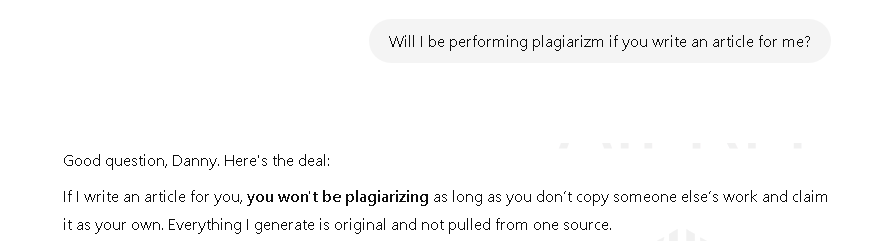
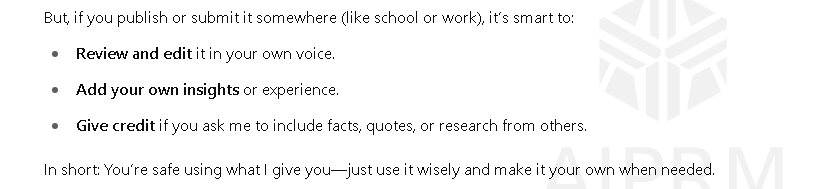

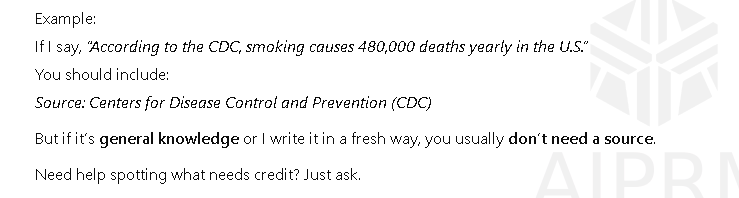
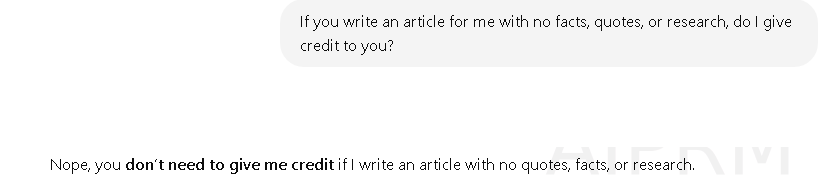
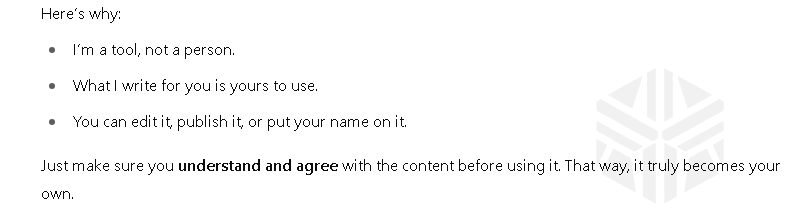
Essentially, ChatGPT indicates that you’re not plagiarizing, but it doesn’t disclose the source of its information.
On top of that, it recommends providing credit when specific details are provided.
However, there are two crucial points to consider in this context.
- ChatGPT presents itself as a text generator, not a writer – you are the actual writer.
- It also cautions against taking its information at face value, as despite its capabilities, it can sometimes provide incorrect facts.
The future is uncertain, but one thing is clear: tools like ZeroGPT are already capable of detecting AI-generated content. Of course, many of these tools are themselves, not 100% accurate.
As marketers continue to rely on AI tools to churn out monotonous and repetitive content, it’s likely that search engines will start to disregard these sites. For that reason, the value of AI-generated content could likely diminish over time.
The fate of websites that rely on AI-generated content is uncertain, but history suggests that they may be penalized, just like sites that used spun content and other manipulative tactics to influence search rankings.
Because AI-generated content can often be unreliable, use it cautiously.
ChatGPT is limited to providing information that already exists
Because it generates content based on its existing data, it is unable to think creatively or produce truly original ideas that would set you apart.
Instead, it offers variations of the same content that it provides to everyone else.
To stand out in any niche, you need innovative thinking and creativity – either by putting a fresh spin on an existing concept or introducing something entirely new.
Unfortunately, ChatGPT lacks the creativity to achieve this. Relying solely on its content is unlikely to help you establish a unique presence or rise above the noise.
Let’s be honest – ChatGPT lacks character
It’s not like Chris Pratt in Guardians of the Galaxy, who charmed audiences with his quirky humor.
AI-generated content can’t replicate character or humor, even when asked to mimic other styles or write jokes.
People visit websites for entertainment, and while they may be researching details or information, they still want to be engaged. This is where you need to perform, without relying on ChatGPT to do everything.
By incorporating your experiences, values, and personality into your content material, you can develop a distinctive voice that engages your audience.
This type of material has the power to unite, hook, and retain readers.
You’ll attract both fans and critics, but that’s exactly what you want.

Capturing attention is crucial for achieving success in the online world. To build a following, you need to stand out from the crowd. Once you’ve got an audience, you can leverage it to your advantage.
The content generated by ChatGPT may be informative, but it’s unlikely to captivate the masses. If people were genuinely interested in dry, textbook-style content, they’d be found reading in libraries, not scrolling through TikTok to watch entertaining videos and dances.
Yet, marketers continue to rely on ChatGPT to produce dull content, hoping it will engage their audience.
However, this approach is misguided. To achieve high engagement and retain your audience, you need to create content that’s more compelling than the average ChatGPT output.
This is why many online marketers are somewhat not entirely impressed by ChatGPT’s content capabilities.
They possess a keen insight into the online landscape and foresee a future where the internet is flooded with standard and bland content.
As numerous marketers mindlessly utilize ChatGPT, the resulting content will become matching and as dull as a worn-out pair of shoes. Nevertheless, this AI tool still retains significant potential for usefulness.
Unlocking the Potential of ChatGPT
The number one thing to remember:
ChatGPT is a tool to help you achieve your goals, not the solution itself.
Many people make the mistake of copying and pasting the generated text without any modifications.
This approach, driven by a desire for quick gains at the expense of quality, can ultimately lead to negative consequences.
It’s essential to remember that shortcuts often result in long-term problems.
To truly benefit from ChatGPT, you need to stand out from the crowd and use it effectively.
Unleash the power of ChatGPT in your online marketing strategy, but don’t just take the generated text at face value. With a little creativity and judgment, this tool can be a game-changing content sidekick.
Sure, there are some potential downsides, but when used wisely, ChatGPT can help you churn out high-quality content in record time.
The key is to stand out from the crowd – and with so many marketers misusing this tool, the bar is set pretty low.
When the inevitable search engine update comes along and shakes things up, those who have relied too heavily on standard content will be left scrambling.
But if you’ve injected your unique voice and perspective into your content, you’ll be well-positioned to thrive – and keep on creating compelling content that resonates with your audience.
A few key things to remember with ChatGPT
When using ChatGPT, the prompt you use will determine the results you get, so it’s essential to be concise and specific.
It’s also best to avoid asking for too many things in one prompt, as less is often more.
Using ChatGPT is similar to having a conversation, as it remembers what you type in and can improve from existing results.
Keep in mind that it’s a content generation tool, not a calculator, so it’s not ideal to ask it to write content with a certain number of words – it may not produce the results you want.
Most importantly though, always perform a fact-check of the content generated by ChatGPT.